
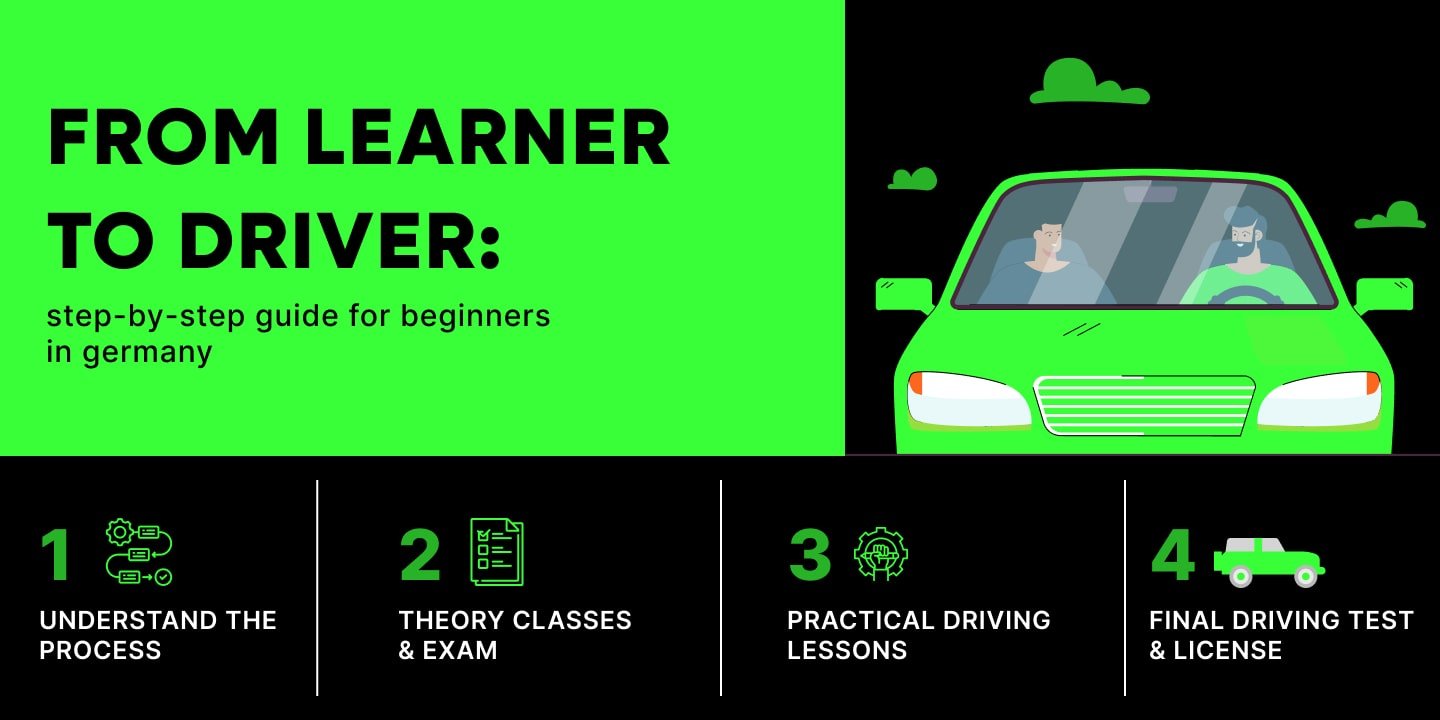
Learning to drive is a big milestone. It opens doors to freedom, responsibility, and new experiences. But the process of driving, for beginners, can feel overwhelming. Between theory classes, practical lessons, and understanding local rules, there’s a lot to take in. Whether you’re a teen, a new adult driver, or someone new to German roads, this guide will walk you through every step in simple, clear language.
Germany’s Road to Driving: Over a Million Tests and a Tough First Hurdle
According to Germany’s Kraftfahrt-Bundesamt (KBA), over 1.1 million driving tests are conducted each year a clear indication of how structured and closely regulated the country’s licensing process is. But how many actually succeed?
The theory portion of the German driving exam is far from a routine quiz. It’s rigorous, detailed, and designed to ensure drivers are truly road-ready. Unsurprisingly, according to TUV, about 40% of first-time candidates fail the theory test, underscoring just how critical proper preparation is even guided by a certified driving institute.
What Driving Lessons Really Teach Beginners?
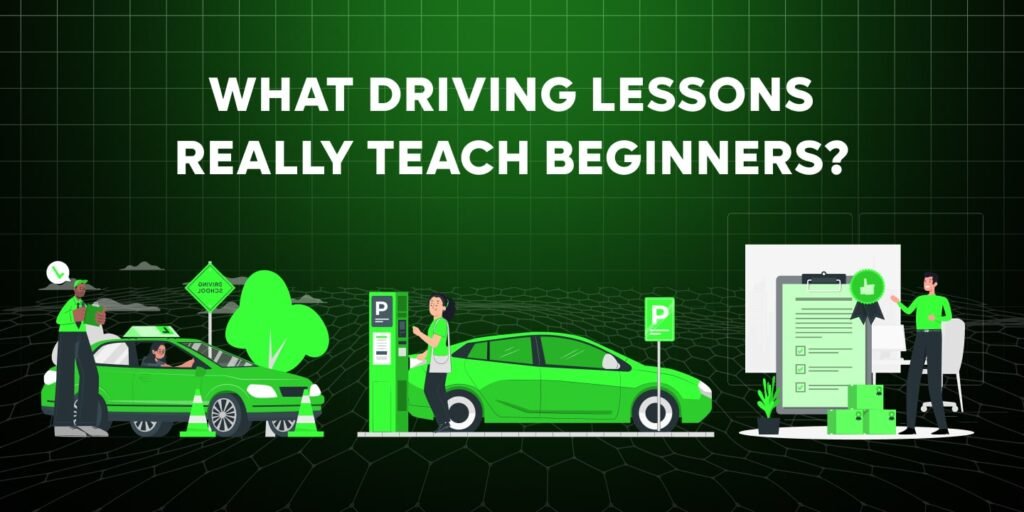
Driving lessons for beginners are structured sessions provided by certified instructors to help new drivers learn the basics of operating a vehicle. These lessons cover everything from starting the car, steering, and braking to make you understand road signs and traffic rules. In Germany, they are a legal requirement that include both theoretical and practical training. The goal is to build confidence, teach safe driving habits, and prepare learners for their driving test.
Key Components of Driving Lessons

newbie’s guide is more than just learning how to steer a car. They follow a structured plan designed to build both knowledge and skill step by step. Here’s what’s typically included:
- Theory Lessons: These cover traffic signs, rules, road safety, and how to handle different situations. In Germany, you must attend a minimum number of theory sessions before taking the written test.
- Learning Car Control: This part teaches you how to start the car, use the clutch and gears, steer smoothly, and stop safely. It often starts in quiet areas like empty parking lots.
- On-Road Practice: You’ll drive in real traffic under supervision. This includes driving in urban streets, rural areas, and highways to prepare you for everyday driving conditions.
- Special Situations: Lessons include driving at night, in harsh weather, and on high-speed roads like the Autobahn(highway), which are required for your driving test in Germany.
- Mock Tests: Your instructor may simulate both the information and practical tests to prepare you. This helps build confidence and correct common mistakes before the real exams.
- Feedback and Correction: After each session, the instructor gives feedback to help you improve. Every lesson builds on what you’ve already learned.
Step 1: Register at a Certified Driving School (Fahrschule)
The first step in driving for beginners is enrolling at a certified driving school. In Germany, self-taught driving isn’t allowed learning must be done under the supervision of licensed instructors. When choosing a good driving school, it’s important to look beyond just availability.
Make sure the instructors are well-qualified, the theory lessons are supported with visual aids, and the school offers a structured curriculum for both informative and practical training. Also, consider how long the school has been operating and the experience it brings. These factors play a key role in ensuring you receive high-quality instruction from the very beginning.
Step 2: Attend and Complete Theory Lessons
During theory lessons, you’ll sit in a classroom (or join online) with other learner drivers. A certified instructor will guide you through all the important road rules and safe driving practices. You’ll cover topics like traffic signs, rights of way, stopping distances, speed limits, and how to behave in different weather or traffic conditions.
You’ll also learn about hazard perception how to spot danger early and respond calmly. This part is very important because it teaches you how to think like a safe driver before you’re even behind the wheel.
In total, you’ll need to complete 14 double sessions of theory classes. If this is your first time getting a license, you’ll need two extra sessions on top of that. These classes are interactive, so you’ll watch videos, see real-life driving examples, and sometimes use apps or practice quizzes to test your knowledge.
By the end of your theory topics, you’ll be well-prepared to take the official theory test and more importantly, you’ll understand how to drive safely and responsibly.
Step 3: Apply for Your Provisional License
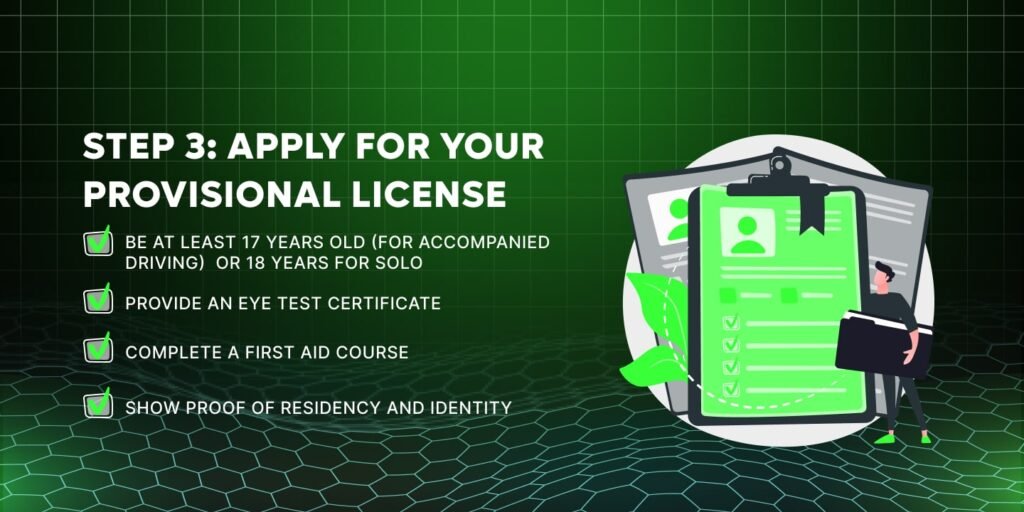
To begin practical lessons, you need a learner’s license (also called a Führerscheinantrag). You’ll need to:
- Be at least 17 years old (for accompanied driving) or 18 years for solo
- Provide an eye test certificate
- Complete a first aid course
- Show proof of residency and identity
Your driving school will help you with the paperwork. Once approved, you’re officially allowed to start driving lessons with your instructor.
Step 4: Time to Begin Your Practical Driving Lessons
Now, the real journey begins! During your practical lessons, your instructor will guide you through both the basics and more advanced driving techniques. You’ll start building real skills behind the wheel, from simple movements to handling more complex situations on the road. You’ll have 12 special driving sessions, five on highways, four during the night, and three on country roads. Stay focused, stay calm, and trust the process everything you’re about to learn plays a key role in becoming a safe and confident driver. Some of the rules you will learn in lessons
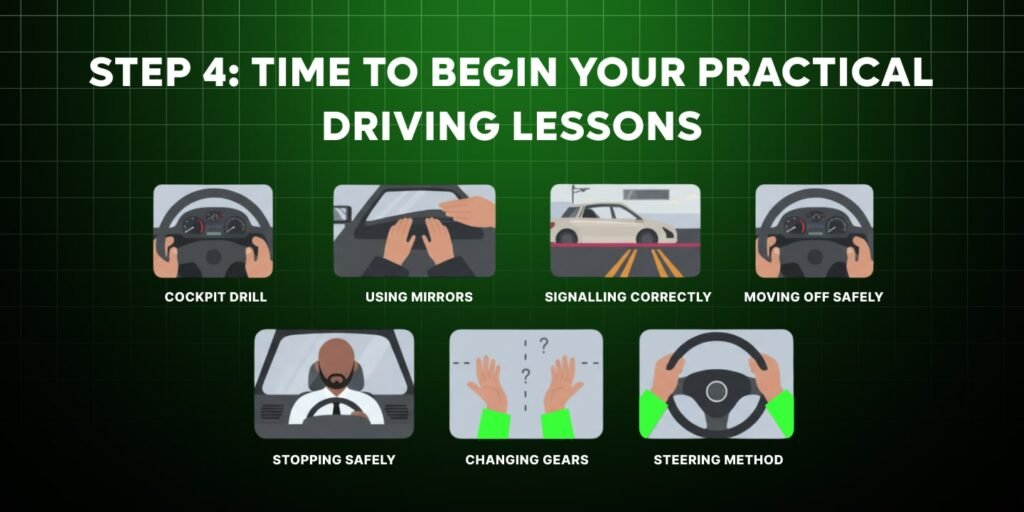
- Cockpit Drill (DSSSM)
Learn the first things to check when you get in the car:
Doors, Seat, Steering, Seatbelt, Mirrors.
This routine helps you get comfortable and set up correctly before driving.
- Using Mirrors the Right Way
Find out how to adjust and use your mirrors before every drive. This helps you stay aware of what’s happening around your car.
- Signalling Correctly
You’ll learn when to use signals and how to time them so other drivers know what you’re doing.
- Moving Off Safely (POM Routine)
Prepare, Observe, and Move.
This routine helps you start driving smoothly from a parked position with the right checks and clutch control.
- Stopping Safely (MSM Routine)
Mirrors, Signal, Maneuver.
You’ll learn how to stop the car in a controlled and safe way using these steps.
- Steering with Pull/Push Method
Find out how to hold the wheel properly and steer using a smooth pull and push movement for better control.
- Changing Gears (Manual & Automatic)
Learn how and when to shift gears in both manual and automatic cars. You’ll also get tips on smooth gear changes and safe control in traffic.
All of these steps are designed to help you learn proper car control so you can feel confident and in control every time you’re on the road.
Step 5: Prove Your Skills in the Final Driving Tests
After completing your theory lessons, the driver guide will take you to the theory test, which consists of multiple-choice questions and video simulations. You must pass this before moving to the final step. You can take practice tests online through your driving school or apps approved by the German Road Safety Council.
Once your instructor feels you’re ready, you’ll schedule the practical driving test. This test usually lasts 45 minutes. An examiner sits beside you and checks your ability to drive safely and follow rules.
If you fail, don’t worry you can retake it after some additional lessons. Many learners pass on their second attempt.
Step 6: Get Your Driver’s License
Once you pass the practical driving test, you’ll be issued your official German driver’s license. However, if you don’t feel fully prepared for the test or believe another school might offer better support, you’re free to switch driving schools at any time. Factors like instructor compatibility, teaching style, and flexible lesson schedules can make a significant difference in your first time driving experience.
If you’re under 21 or in your first two years of holding a license, you’ll be in the probationary period (Probezeit). During this time, any serious driving offences may result in mandatory retraining or even temporary license suspension. So it’s essential to drive responsibly.
Common Challenges You’ll Face During Driving Lessons—and How to Overcome Them!
When you’re driving for the first time, learning to drive can feel like a mix of excitement and stress. One moment, you’re eager to hit the road, and the next, you’re gripping the wheel, wondering what you’ve gotten yourself into. The good news? You’re not alone. Every beginner faces a few hurdles but with the right approach. You’ll move past them faster than you think.
1. Feeling Nervous in the Driver’s Seat
It’s completely normal to feel nervous during your first few lessons. Your hands might sweat, your heart might race, and you may worry about every little move. Don’t let that shake your confidence. Start slowly, stick to quiet streets, and trust your instructor. With time and a few calm, steady lessons, you’ll begin to feel in control and yes, even enjoy it.
2. Struggling to Do Everything at Once
Mirrors, pedals, gear changes, signals it can feel like too much at first. You’re learning a lot, and your brain’s trying to catch up. The trick? Focus on one skill at a time. Master mirror checks. Then, work on clutch control. Build layer by layer. Before long, it’ll all come together, and you won’t even have to think about every step.
3. Getting Lost in the Theory Lessons
If traffic rules and signs feel confusing, don’t worry you’re not alone. Many learners, especially those new to Germany, find the theory part tough. Make use of visual resources, practice quizzes, and video guides outside class. And if something doesn’t make sense, speak up. Instructors are there to help, and asking questions is how you truly understand the material.
4. Worrying About Failing the Test
Almost every learner fears the big test. What if you make a mistake? What if you fail? The truth is, many people don’t pass the first time and that’s okay. Failing just means you need a little more practice. What matters is that you learn from it. With each lesson, you’ll get better, and your second try might just be the one that gets you your license.
5. Driving in Tough Conditions
Rainy roads, night driving, or busy city streets can feel intimidating at first. But remember, your instructor is there to guide you through each situation. These safe driving practices are designed to build your confidence. The more experience you get, the more capable you’ll feel even when driving feels a little outside your comfort zone.
Learning to drive is a journey. There will be days when it feels frustrating. But there will also be moments where you realise, “I’ve got this.” Stick with it, practise often, and trust yourself. You’re closer than you think to becoming a confident, skilled driver.
Start Your Journey To Become A Pro Driver!
At Fahrschule Abgefahrn, we understand that learning to drive is a life-changing journey. Our certified instructors are patient, professional, and passionate about road safety. Whether you’re just starting or switching schools, we’re here to make the process easier, smoother, and more effective.
Reach out to our team today and let our expert team help you become a confident, responsible driver.